
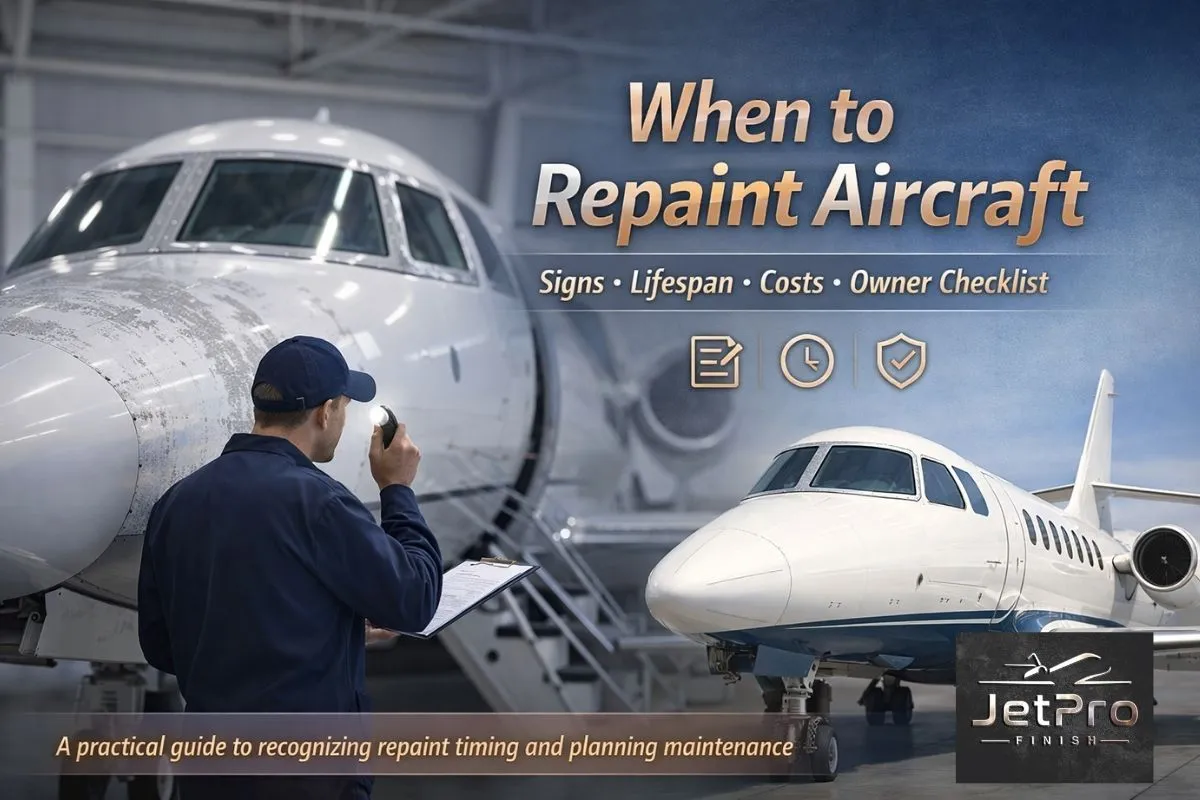
One of the most important maintenance questions aircraft owners face is when to repaint aircraft to maintain structural protection, appearance, and long-term value. Aircraft paint systems serve as protective barriers against corrosion, UV exposure, moisture, and environmental wear, making proper timing an important part of responsible ownership.
Understanding repaint timing helps reduce long-term maintenance costs, minimize downtime, and preserve aircraft performance. This guide explains coating lifespan, warning signs, influencing factors, costs, and a practical checklist to help determine the right time for refinishing.
Aircraft Owner Resources → Cost & Planning
Understanding aircraft painting costs helps owners plan maintenance budgets, evaluate options, and make informed decisions about refinishing investments.
Typical Paint Lifespan for Aircraft
Aircraft coatings gradually degrade over time, depending on operational conditions and environmental exposure. Knowing general lifespan expectations helps owners plan maintenance more effectively.
Typical exterior paint lifespan
-
Single-engine aircraft: 5–10 years
-
Turboprops: 6–12 years
-
Light jets: 7–12 years
-
Large jets: 8–15 years
Aircraft exposed to coastal environments, high humidity, or intense UV radiation may require refinishing sooner.
Interior coating lifespan
Interior finishes typically last between 5 and 10 years, depending on usage levels and material quality.
Signs That Indicate When to Repaint Aircraft
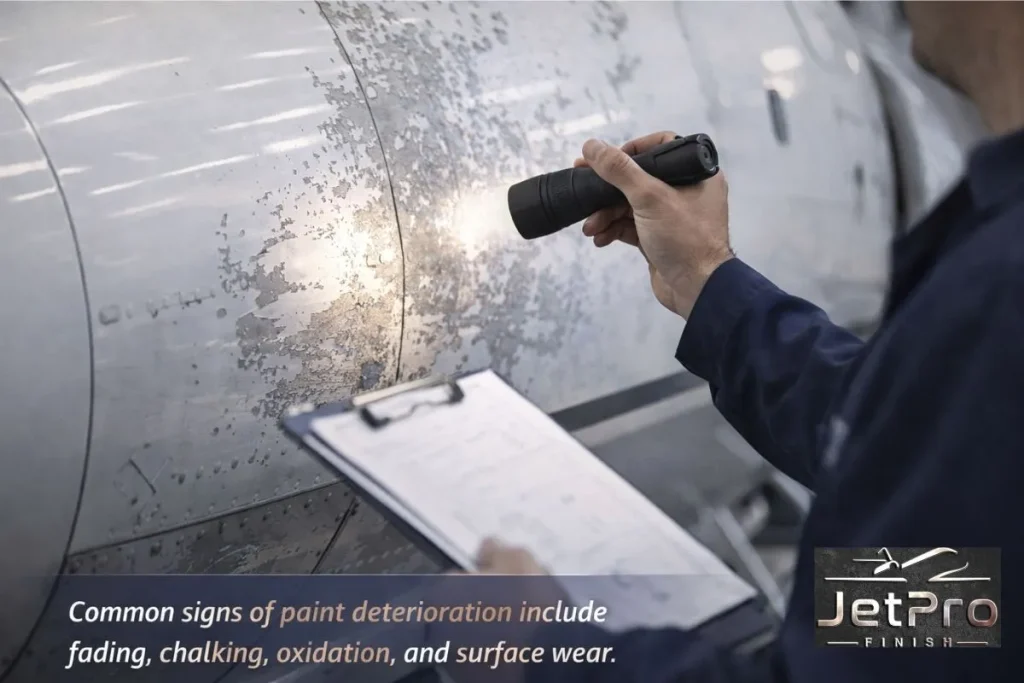
Recognizing early warning signs helps prevent structural damage and unnecessary repair costs while identifying when to repaint aircraft.
Exterior warning signs
-
Fading or chalking paint
-
Cracking or peeling coatings
-
Visible corrosion or oxidation
-
Primer showing through
-
Loss of gloss or protective finish
-
Uneven discoloration
Interior warning signs
-
Surface wear or scratches
-
Staining or discoloration
-
Peeling interior coatings
-
Outdated cabin appearance
-
Damage from moisture exposure
These indicators suggest coatings may no longer provide adequate protection.
Risks of Waiting Too Long for Repainting
Delaying refinishing can lead to more extensive maintenance needs and higher restoration costs.
Potential consequences include
-
Increased corrosion risk
-
Structural surface degradation
-
Reduced resale value
-
Longer maintenance downtime
-
Higher repair expenses
-
Possible compliance concerns
Proactive maintenance helps preserve structural integrity and long-term value.
Factors That Influence Repainting Timing
Several variables affect coating durability and maintenance schedules.
Environmental exposure
Salt air, humidity, and extreme sunlight accelerate coating wear.
Flight frequency
High-utilization aircraft experience faster surface wear.
Storage conditions
Hangared aircraft typically maintain coatings longer than those stored outdoors.
Maintenance practices
Regular cleaning and inspections extend coating lifespan.
Paint system quality
Higher-quality aviation coatings often provide improved durability.
Cost Considerations for Repainting
Costs vary depending on aircraft size, condition, and project complexity. Not all aircraft require full repainting, and targeted refinishing may address specific areas of wear.
General repaint cost ranges
-
Single-engine aircraft: $15,000–$40,000+
-
Turboprops: $40,000–$100,000+
-
Light jets: $80,000–$200,000+
-
Large jets: $200,000–$500,000+
Interior refinishing costs depend on materials, customization, and project scope.
Owner Checklist to Determine Repainting Needs
Use this checklist to evaluate whether refinishing may be appropriate.
✔ Paint is fading or chalking
✔ Cracking or peeling coatings
✔ Visible corrosion or oxidation
✔ Loss of gloss or protective finish
✔ Interior surfaces show wear
✔ Aircraft approaching typical coating lifespan
✔ Preparing aircraft for resale
✔ Maintenance inspection recommendations
If multiple items apply, a professional evaluation may be beneficial.
Project Timeline Expectations
Maintenance timelines vary depending on aircraft condition and the scope of work.
Typical ranges:
-
Exterior repaint: 2–6 weeks
-
Interior refinishing: 2–5 weeks
-
Full refurbishment: 4–8 weeks
Planning ahead helps minimize operational disruption.
How Refinishing Can Impact Aircraft Value
Refinishing is often viewed as both a maintenance investment and a value preservation strategy.
Potential benefits include:
-
Improved resale appeal
-
Enhanced visual appearance
-
Better corrosion protection
-
Increased buyer confidence
-
Updated branding or appearance
Aircraft with well-maintained finishes often attract stronger market interest. Updating striping can refresh the appearance without requiring full refinishing.
Choosing a Professional Refinishing Provider
Working with experienced aviation finishing specialists ensures coatings are applied according to industry standards and regulatory requirements.
Look for providers with:
-
Aviation-specific expertise
-
Experience with multiple aircraft types
-
Compliance knowledge
-
Proven finishing processes
-
Quality assurance procedures
Final Thoughts on When to Repaint Aircraft
Understanding when to repaint aircraft helps owners protect structural surfaces, maintain appearance, and preserve long-term value. Regular inspections, awareness of coating lifespan, and proactive maintenance planning allow aircraft to remain protected and visually maintained throughout their operational life.
Making informed refinishing decisions helps reduce long-term costs while maintaining performance and asset value.
FAQ
How often should aircraft be repainted?
Most aircraft require repainting every 5–12 years, depending on operating conditions and coating quality.
What happens if aircraft paint is not maintained?
Protective coatings may degrade, increasing corrosion risk and repair costs.
Does repainting improve aircraft value?
Well-maintained finishes can improve resale appeal and buyer confidence.
Request a Professional Assessment
If you are unsure about coating condition or maintenance timing, this When to Repaint Aircraft Guide explains how a professional evaluation can help determine the best course of action based on aircraft usage, environment, and goals.
Contact JetPro Finish to learn more about refinishing options and maintenance planning guidance.